
Tags: Black Mold, Mold in Basement, Mold in House, Mold Inspection Toronto, Mold Remediation, Mold Toronto, Mold Water Damage, Toronto, Toronto Mold, Types of Mold,
For non-emergencies use our contact form


Emergency? 24-Hrs
416.800.0000The different types of mold found indoors usually develop where moisture remains on building materials. GTA Restoration helps property owners assess visible growth, check moisture conditions, and plan cleanup when needed. Most importantly, controlling water and humidity helps reduce the conditions that allow common types of mold to return.
Visible mold may appear in many colours and patterns. However, colour alone cannot reliably identify exact mold species or determine the level of concern.
A persistent musty smell may point to damp materials or hidden indoor mold types. Therefore, investigate the moisture source instead of simply masking the odour.
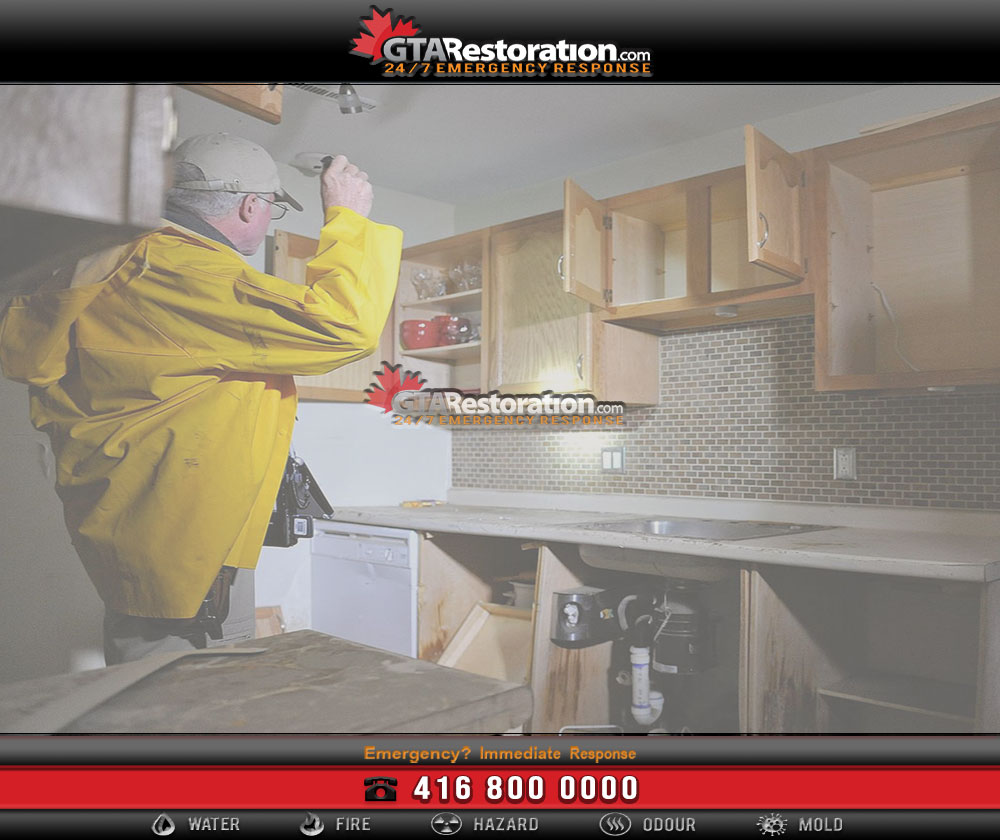
Basements can develop moisture from seepage, plumbing leaks, floods, and high humidity. As a result, several different types of mold may grow when materials remain damp.
Bathrooms often experience condensation and high humidity. Proper ventilation, cleaning, and moisture control can help reduce recurring mold growth.
Roof leaks, condensation, insulation problems, and poor airflow can create attic moisture. Therefore, both the visible mold and the source of dampness require attention.
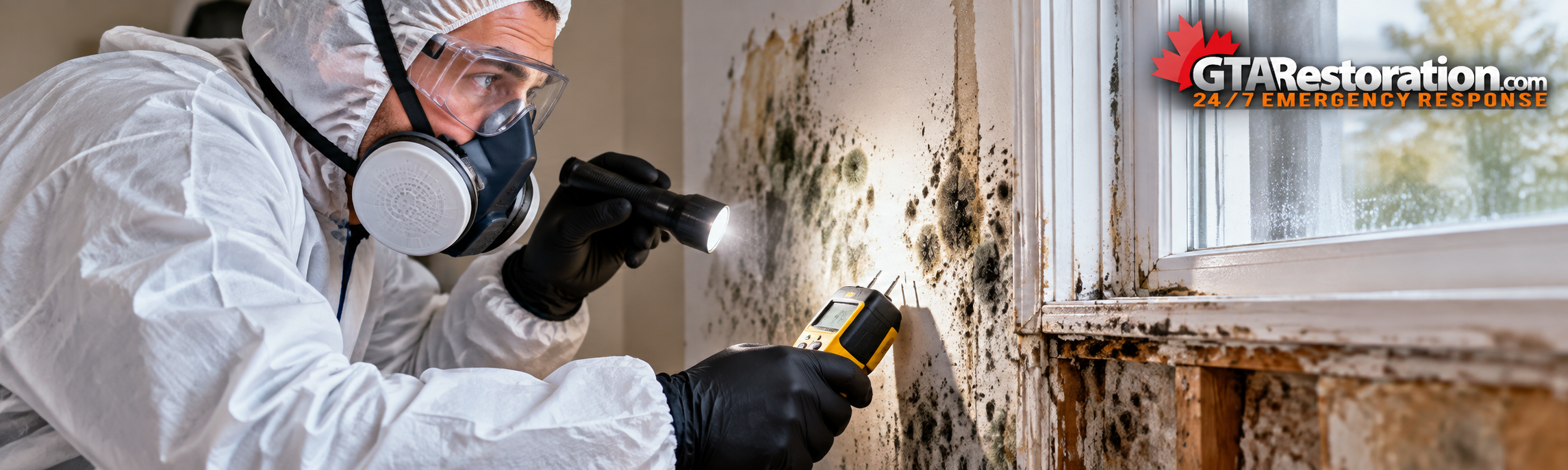
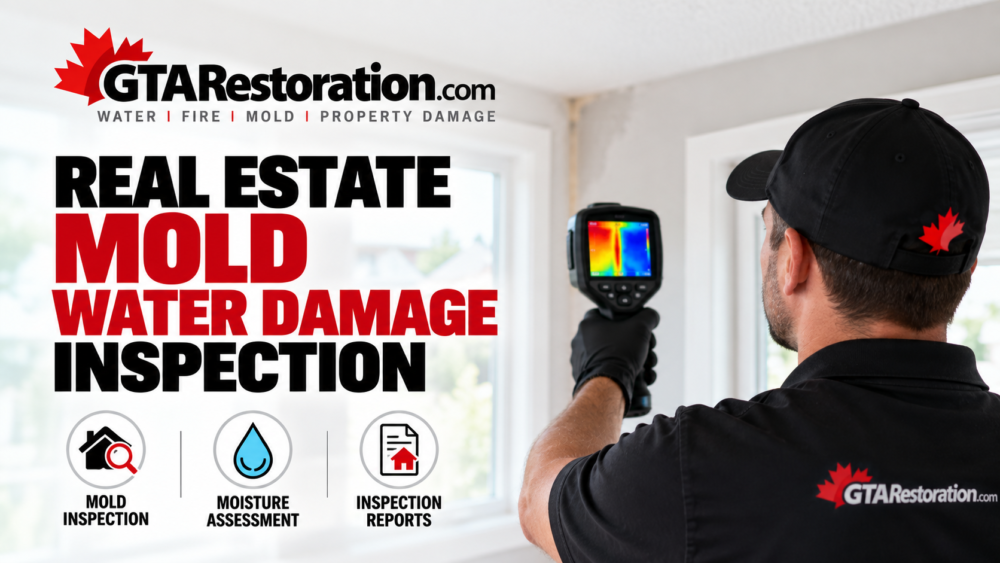
Some types of mold may grow behind drywall, beneath flooring, or inside concealed spaces. Moisture readings and visible warning signs can help guide a closer inspection.
Routine testing is not necessary for every visible mold problem. However, testing may provide useful information when a specific question about mold species remains after the mold inspection.
Water damage can leave moisture inside walls, floors, ceilings, and insulation. For this reason, proper extraction and drying help reduce conditions that support common types of mold.
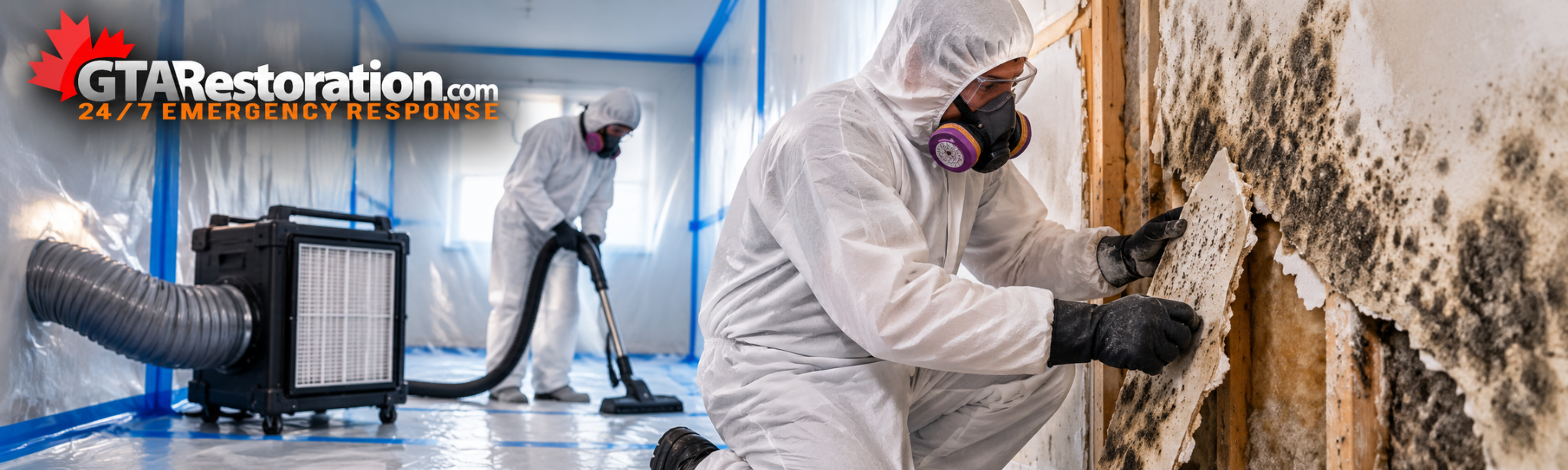
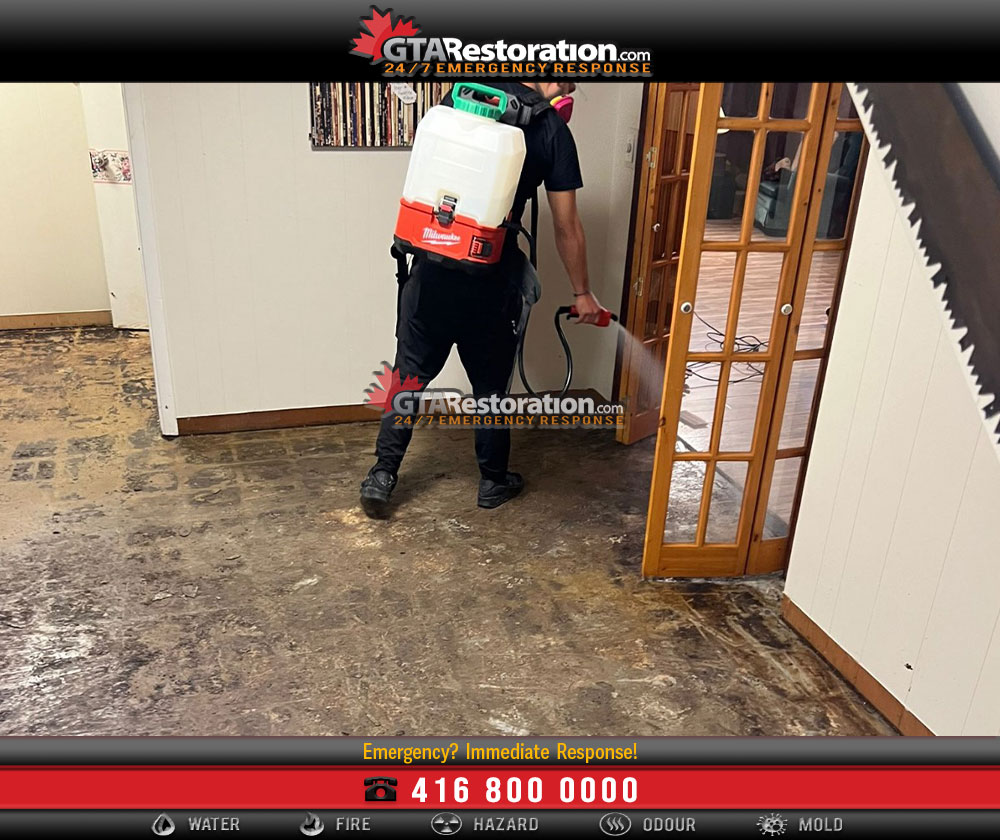
Larger or more complex mold problems may need containment, controlled removal, HEPA cleaning, and drying. The exact remediation plan depends on the affected materials and extent of growth.
Repair leaks, control humidity, improve ventilation, and investigate repeated condensation. In addition, check previously wet areas for signs that indoor mold types may be returning.
Leaks and floods can happen at any time. GTA Restoration provides 24/7 assistance for water damage, drying, different types of mold, and related restoration needs.
Seeing mold, water stains, or recurring dampness?
Contact GTA Restoration for mold inspection, moisture checks, mold remediation, and restoration support.
Nationwide, Local Pricing
GTA Restoration offers local flood & water damage repair, mold removal/remediation, asbestos removal/abatement, fire/smoke damage repair services and much more.
Search
Common indoor mold types can include Cladosporium, Penicillium, Aspergillus, Alternaria, and other fungi that grow where suitable moisture is present.
Yes. Several mold species can share similar colours. Therefore, colour alone cannot reliably identify the exact species.
No. Mold can appear dark, green, brown, grey, or black. Visual appearance alone cannot confirm the exact type of mold.
Leaks, flooding, condensation, high humidity, and damp materials can support mold growth. Therefore, moisture control is essential.
No. Visible mold with a clear moisture problem often does not require routine testing. However, testing may help when identifying a particular mold species serves a specific purpose.
Consider professional help for larger areas, recurring indoor mold, hidden moisture, major water damage, or affected porous building materials.
We Work Direct with All Insurance Companies
Wᴇ ᴀʀᴇ ᴄᴏᴍᴍɪᴛᴛᴇᴅ ᴏɴ ᴡᴏʀᴋɪɴɢ ᴡɪᴛʜ ᴇᴠᴇʀʏ ɪɴsᴜʀᴀɴᴄᴇ ᴄᴏᴍᴘᴀɴʏ ᴀᴄʀᴏss Cᴀɴᴀᴅᴀ & USA.
Learn more ↴ 
RELATED ARTICLES
follow us on 




Our Clients

Affiliates

Call Us 416-800-0000
Emergency? Immediate response 24/7
We cover all GTA 24/7.
Head Office:
250 Consumers Rd,
#10
Toronto, ON
M2J 4V6,
Open 24 hours
Downtown Office:
1 Toronto St,
#10
Toronto, ON
M5W 1A1,
Open 24 hours
For non-emergencies use our contact form
Not sure what you need?
Call us today to find the best product for your situation.
Head Office:
101 Lebovic Ave,
Unit #10
Scarborough,
ON, M1L 4T7
Hours
24-Hours Open
Downtown Office:
250 Yonge Street,
Unit #1A
Toronto,
ON, M5B 2L7
Hours
24-Hours Open
Different Types of Mold
Get a quote today


You must be logged in to post a comment.